TO LOOK PAST DEATH


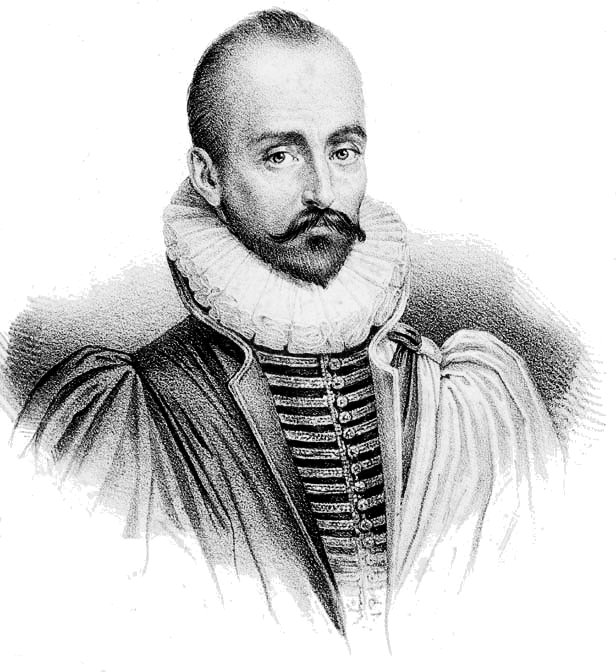
Portrait of Michel de Montaigne


Michel de Montaigne, the sixteenth century French essayist, contends that it is madness “to judge the true and the false from our own capacities”.

He uses the example of a miracle.  Humans can never agree on what constitutes a miracle. What may seem a miracle to one is easily explained by another. What is possible today seemed miraculous twenty years ago.


There is a silly arrogance in continuing to disdain something and to condemn it as false just because it seems unlikely to us


As soon as you declare anything to be impossible, you are claiming to know the limits and bounds of nature.  But your knowledge, as a group or individually, is changing all the time. What once was thought impossible is now taken for granted. If you had never seen an ocean before, you would call a lake an ocean. Why judge of anything when you don’t have all the facts?
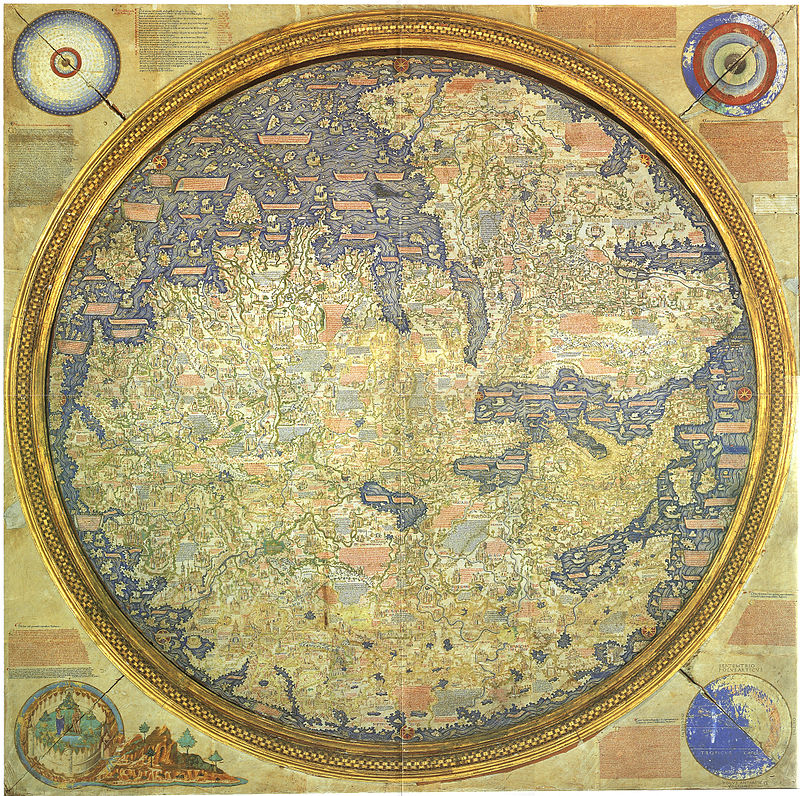
 

World map drawn in 1450 by Fra Mauro.

World map 1450, by Fra Mauro


Montaigne had a near death experience that showed him that not only do you not have all the facts, but you also cannot trust the evidence of your senses at all.  The way that an event is seen by an outward observer may be quite different from the way it is experienced by the one undergoing it.

In a riding accident, he suffered the full weight of a very large man landing on him like a thunderbolt, knocking him unconscious, off his horse, “dead, stretched on my back, my face all bruised and skinned, my sword, which I had had in my hand, more than ten paces away, my belt in pieces, having no more motion or feeling than a log.”

Details courtesy Sarah Bakewell’s  How to Live, or A Life of Montaigne.

He was picked up by his frightened servants and carried home, coughing, vomiting up clotted blood, thrashing about and ripping violently at his stomach. “My stomach was oppressed by the clotted blood; my hands flew to it of their own accord, as they often do where we itch, against the intention of our will.”

It looked to all observers as though he were experiencing a painful, violent death.


“It seemed to me that my life was hanging only by the tip of my lips; I closed my eyes in order, it seemed to me, to help push it out, and took pleasure in growing languid and letting myself go. It was an idea that was only floating on the surface of my soul, as delicate and feeble as all the rest, but in truth not only free from distress but mingled with that sweet feeling that people have who let themselves slide into sleep.”


Except he didn’t die. After several hours he recovered, lived another twenty years, lost all the fear of death which had plagued him as a young man, and wrote most of the Essais.

For weeks afterward Montaigne questioned the servants about what they had seen, intrigued by how contrary their observations were to his own experience, which was all of a peaceful, merciful release. Lying on his bed after the accident, he was anticipating “a happy death”.

Long afterward he wrote,”If you don’t know how to die, don’t worry; Nature will tell you what to do on the spot, fully and adequately. She will do this job perfectly for you; don’t bother your head about it.”

death 21


Nature does this perfectly


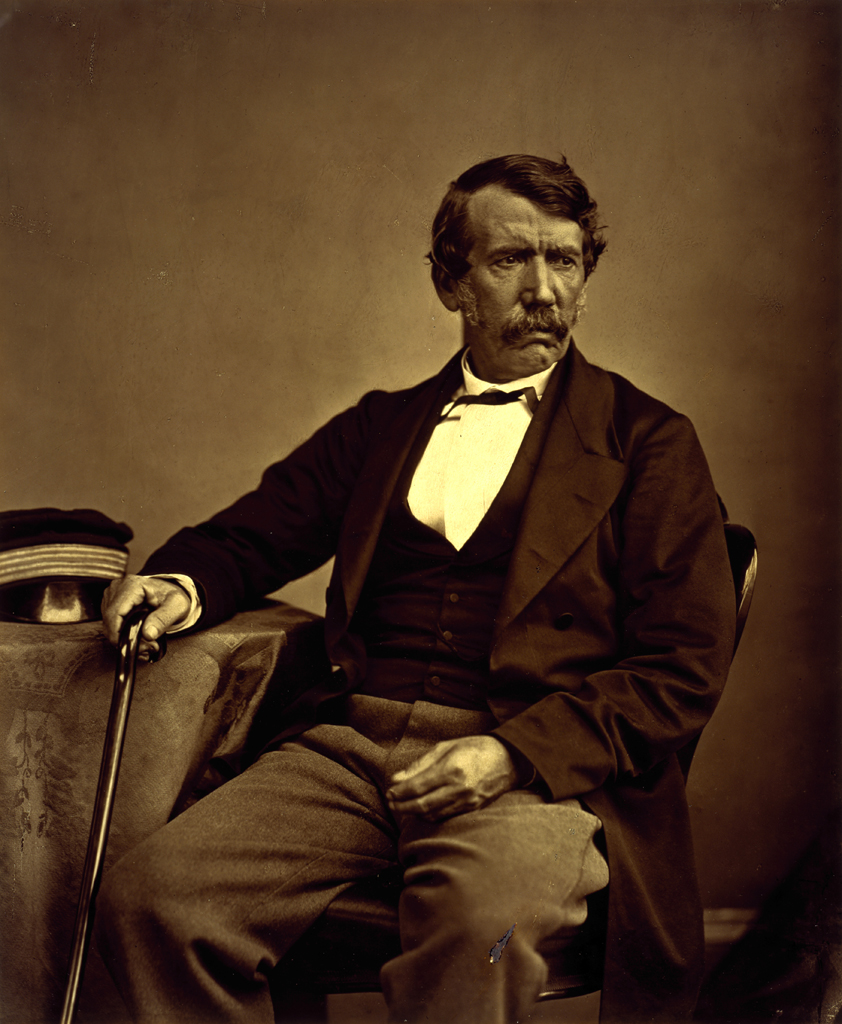
Another brush with the benevolent hand of nature was recorded by Dr. David Livingstone, the missionary and African explorer of the nineteenth century. Livingstone suffered a lion attack in an African village, trying to defend the village’s sheep. He shot the animal twice, which didn’t kill but enraged it. The lion “caught me by the shoulder as he sprang, and we both came to the ground together. Growling horribly close to my ear, (the lion) shook me as a terrier dog does a rat.” (The Life and African Explorations of David Livingstone).

death 8


We are reminded of Montaigne’s injunction against taking things as they seem. We don’t even know what we don’t know. Our knowledge is always limited and always changing. If you compare yourself now to yourself ten, twenty years ago, you will see this is true. What may look like a violent shock may well be felt as a floating euphoria.

In this case, what happened? A man was taken by a lion, was aware of injuries, a situation which we can imagine in one way only : as horrific.

 

death 9

Neither pain nor terror


Livingstone goes on. “The shock…caused a dreaminess, in which there was no sense of pain nor feeling of terror, though quite conscious of all that was happening.”

He was saved by the intervention of his servant, while the lion succumbed to the two bullets inside him. Livingstone treated his own wounds without anesthesia, and lived another twenty-one years.


How would the world have been different if Montaigne and Livingstone had died of their injuries?  If they had not written of their travels, Livingstone, into the heart of Africa, and Montaigne, into the heart of himself.


Montaigne, on sadness:

I am among those who are most free from this emotion; neither like it nor think well of it, even though the world, by common consent, has decided to honor it with special favor. Wisdom is decked out in it; so are Virtue and Conscience – a daft and monstrous adornment


Wisdom is the knowledge that helps us to live. Montaigne’s whole life and Essais was a search for that knowledge.

To be alive is to be subject to constant change.

It does not help us to live if we imagine there is wisdom in sadness.


Why give so much power to sadness?  Montaigne, who faced down his own end, knew, for the rest of his life, that all sadness and all fears were unreal, meaningless, and forever disabled.


And it is given us to look past death, and see the life beyond

A Course in Miracles, Workbook, Lesson 163


DEFEND NOT YOURSELF

Let me not engage

Let me not engage

I will not engage in any tiresome practices like manipulation.

But isn’t fighting against manipulation, refusing to be manipulated, “taking up arms against a sea of troubles”, just engaging with it all the same?  To fight against a thing is to admit that it is real. 


Two elephants engaged in battle with each other

To fight against is to admit the reality of


And that is why you must defend not yourself. When you reflexively defend yourself, you are admitting that the claim they are making against you is real. That it deserves your giving time and devoting attention to refuting it. You are taking the claim against you seriously. Who are you defending? What are you afraid of?


Young man in deep thought


It always comes back to fear. Every negative feeling-state that you experience is the apparition of some fear you have on a deep level, maybe not recognized by conscious you.


Two wolves standing on a rock, very menacing

Call it out, in all its guises


Do you see now how fear leads to guilt which leads you to defend yourself like a Pavlovian dog? Fear is ruling your world. But you must call it out, whenever you see it, in all its guises. When you are accused of anything, realize it is you who accuse yourself with your attention. You can ask: what do I accuse myself of? You can identify the fear. A few minutes is more than sufficient if you are honest in your desire to stop playing games.


accept

What am I choosing to see?

They accuse me of being vindictive, but it is I who see vindictiveness in them. They accuse me of being a hypocrite, but they are hypocrites themselves.

Ask instead: what am I choosing to see?


Defend not yourself


It is always easy to see the faults in other people. That’s basic. Even the sinner does this easily; in other words, everyone. But isn’t it only proof of your propensity to see fault in other people? And why are you so motivated to find fault? Why would you try so hard to put other people down? It can only be to make yourself feel better.  If they are vindictive and you notice it, it can only be so that you, by contrast, can feel the opposite. If you find them boring, it can only be because you need to make yourself better than them in some way.


It is easy to see the faults of others

So easy to see the faults of others


But call it out, this impulse to find fault in others. It can be a simple reminder, such as,  “There I go again, finding fault in others, blaming. Stop. Just because. Blaming never solved anything.” Don’t be tempted to engage in mental court cases. You are not in a courtroom.


Defend not yourself


Don’t tell a story: give facts. Every time you find yourself rehearsing or replaying an interaction, it is another manifestation of fear. By fashioning a narrative of events, you are fashioning a persona for yourself. Depending on the audience, you may want to project yourself as smart, knowledgeable, sophisticated, any one of a number of attributes you lust after because you think you are not already perfect.

When you see how you are using your interactions to portray yourself one way or another, you will easily stop this practice.


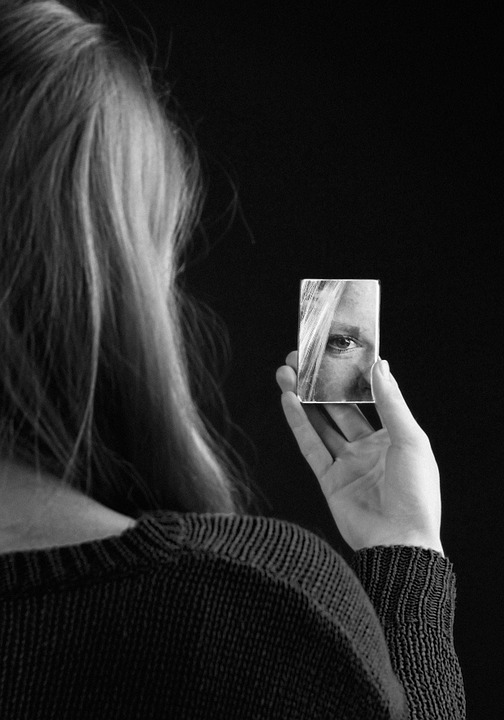
A woman starying at a reflection of her eye in a fragment of a mirror

You will easily stop this practice


Defend not yourself


When you are asked a question, or required to give a version of events, stick to what two independent observers could agree on. This happened and then this happened. Think about how it would appear to an outsider. This steers you away from adjectives, which are judgments: unreasonable, petty, irresponsible, selfish, jealous, and so on. All effective tools of the ego.


less talk6


If you stick to relating facts about a situation, your discussions will not collapse, or get distracted, and will always achieve their objectives.

Who would not want this?

Stop trying to get the best for yourself in any situation. To do so implies that something could not be perfect. Whenever you see or make differences in people, you are affirming  the notion that some people are better than others. Stop. You are blowing bubbles, playing with shadows; it is all a mirage, a cloud, a chiaroscuro of effects.


Come to what is real


BASIC PREMISES

I do not have to discuss anything with anyone under the name of “getting it all out”, or “talking with a sympathetic ear”, or “getting solace”, or whatever other idea I might once have used.  I do not have to discuss how I will be with anyone. 


Show. This will speak much more powerfully than words.  When you show your meaning, all will feel it, interpret it, and be affected by it.  Would you like your teaching to be taken to heart by everyone?  In that case, live your teaching. Show, don’t tell.

But when you use words, you force your hearers to hear with their physical ears, which feed the import to their rational minds, where the message is tied up until 95% diluted.

There is no need to talk and discuss.


basic 9


Neither do I need anyone else to change in any way.  I am not dependent on the actions of other people to feel good, feel bad, never at ease, wondering, worrying what they will do.  I do not need them to do anything for me to remember Who I am. And I have remembered that; now let me take it to heart, be changed, commune with the Self always. This is why and how other people become irrelevant.


You will always be guided as to what to say and do. There is no way for your conscious mind to best strategize this. Leave it out.  Take direction from within. In silence all is made clear. In silence is there great healing.

Silence is your friend

It is not my intention nor my purpose to negotiate conditions under which anything may happen. If there is a question, it is for the Other to explain.


 basic 10


When you have basic premises, they are clear to others even when you don’t enunciate them. In fact, they become all the more apparent exactly when you don’t enunciate them. This takes a little time for humans to assimilate; they would generally rather try to convince others of their positions by sheer force of words.


basic 1


This makes as much sense as trying to draw someone to your side by turning a volley of arrows upon her.


If there is a lack of basic premise in you, this will be interpreted as confusion. Because it is confusion. Lack of clarity regarding your basic premise will beget confusion in all your doings and dealings, and can hardly effect what you would be done.


giving back 8So you can see how important it is, at the start of each interaction, at the birth of each undertaking, that you take some moments to clarify your basic premise concerning it.  Lack of a basic premise will prompt questionings and distract you into attempts to define yourself.  The clear acknowledgement within yourself of a basic premise will silence questions.


*

Who would not want this?

*

A basic premise is not the same as a goal or objective, which represent outcomes in what you call the real world.  A basic premise is a decision you make within.  “I am here to be truly helpful”, “I am here in the best interests of the child”, “May I have no other desire than to do good”, are some examples of basic premises.


basic 11

A decision you make within


In any undertaking or encounter, establish your basic premise within as many times as you wish. Remember also it is not your purpose to argue as before a court. To do so only admits the possibility of guilt, that someone is going to be wrong. All arguing is only the effort to pass the boulder of blame to the other.


Therefore waste no time in arguing, but first establish your basic premise. You can have a general basic premise, that you remind yourself of as you catch yourself in your morning waking moment.  “Let me have no other desire than to do good.” And you can consciously reach for a basic premise for each situation you choose. “I am here to be truly helpful”. In this way, you are entrusted with the gifts of God.


When you have a clear basic premise, and it is aligned with God, you are the judge who just handed yourself a sentence unimaginably favorable to you. Everything is going to fall your way; it cannot help but do this. When you consciously align with His will, you bring Him into the situation. Your clear intention is asking it.


Clarify your basic premise, and all else becomes clear.


May I have no other desire than to do good


DSCN1893


AGENT OF SOMETHING LARGER


A feather quill resting in a bottle of ink

The benefit of doing three pages of writing every day is that it speeds up whatever tedious process you may be going through.  How does it do that? It is like meditation, in that it gets you in touch with the Voice for God. When you approach the writing as a chore, and write prayers to fill up the lines before you can stop, well, that too is a form of asking.

You have done a lot of asking now. You have been heard. We know what you desire. It is time to relax now, listen, to  be that instrument you so often ask to be.

If you knew you could access the Voice for God at any time, why would you not do this, for this is so.  You can access the Voice for God at all times. What is this but the best news you could ever hear?


A figure sitting in meditation


Let me take a moment to be thankful for that now.  Thank you that I can access the Voice for God at all times.

Let me access the Voice now.

Let me be the agent of that something larger. Let me be Your agent.  If there is something to be done, let me be the agent of its being done. If there is something to be voiced aloud, let it be voiced through my throat. If there is something to be thought, then let it be given thought through my molecules, through the matter of my brain, through the ground of my being. May I be wholly used by You. I would consider it the highest honor and the proper fruition of my life as a human, as well as the crowning glory of my existence.


Saguaro cactus in the foreground, against a background of a spring Arizona desert


Must Your agent be conscious?

But my agency does not have to be conscious to me.  I do not insist on Your purpose being revealed to me. How could I understand it? How could I insist on anything?  I am but Your agent. Use me as You wish. Guide me here and there like a puppet. By all means, use my mouth for Your words. I have no will but Yours.


Elaborate, intricate Islamic art

My agency need not be conscious


How much better it is that I do not plot and plan, worrying about events and trying to control outcomes. How much better it is that I surrender my will to Yours. How much better it is that I have stopped worrying about what to say and what to do.

What burdens these are to have been lifted.


Here and there lose their meaning


Desert wildflowers overlook Death Valley, CA


LOVE: THE GUIDING PRINCIPLE

love 52

*

Love must be the guiding principle, the north star, the hand at the tiller, the thesis statement, the main idea, the sine qua non.  There must be none other.  Anything else is wrong.

 *


guiding principle 2Stop projecting yourself outwards. Doing this, you see only the image of yourself writ larger in your interactions with what appear to be others, but are really your creations.  If you are devastated by something that happens, everyone around you will know of your devastation, will mirror it and increase it.  Whatever attitude or position you take about any situation, exactly that attitude is what you will see projected back to you.  If you are elated, people will mirror back your elation. If you are anxious, you will attract and be attracted to anxious people.

And so on.

*

The more negative attention you pay to the situations about you, the more do you only magnify what began in you in the first place. To pay any kind of attention to this maya, this unending, tumbling, whirling cauldron of change that you call reality, is not to be conscious.

becomingImage by Janice De Santis


Consciousness is completely unaffected by maya.  Consciousness is the ever-present knowing of the truth that is always there, although you may not always access it. Sometimes you are in alignment with it, and all deals work out for the good of all with minimal involvement from you.  Friend, this is how it is supposed to feel always!  There is no mandate to be sad, or suffer, or feel apart from something you want. When you feel these ways, it is the result of either a decision you made, or one you failed to make.

*

love 50

A decision you failed to make

*

Lack of consciousness is synonymous with failure to make decisions.  Failure to make decisions is a form of abdication of your prime function here. Failure to make decisions moves you neither backwards nor forwards, it only prolongs how long you must be here. Lack of consciousness is a holding pattern. No one wants to be in a holding pattern for long, do they?  If they knew they were in one.

guiding principle

*

When you are not deeply, quietly aware, then everything else you are paying attention to is just another holding pattern. It is you projecting outwards what you already believe. If you already believe that it’s right to look out for number one, then the people you interact with will have the same beliefs. If you already believe that love must be the guiding principle, then love will enter into every situation you observe, picking you up with powerful wings and flying over all difficulties. Thus do you live out your beliefs.

It is what you came here to do

It is what you came here to do

You all live out your beliefs; it is what you came here to do, to create with your beliefs. Why is consciousness so important?  It is important that you know that, and acknowledge that you are here to create with your beliefs.

I am here to create with my beliefs. I am here to create.

Once you have acknowledged and accepted that you are here as a creator, and that you have the power of choice every moment, it makes sense next to ask: what would I like to create?

*

If you chose now, “Let love be the guiding principle of my life”, then you would never face another decision.  Every decision would be made by that first one.  Let love be the guiding principle of my life.

*

When there is only one way to have life, nothing can present as a decision.  You can make this invitation each morning as you awaken into consciousness:  Let love be the guiding principle of my life. Do this, and then observe how every decision is made for you, with the greatest good to all, and all your concerns grow and prosper, without much attention from you.

DSCN2849


IT IS IN CHOOSING WE ARE CHOSEN


My randomly chosen lesson and workbook section both seek to teach the same thing.  Let me put it into my own words.  It is important I wish peace and joy to whichever one of my brothers may be causing me grief, pain or worry.


Remember, your brother is not causing you anything you aren’t choosing.  You cannot put your unease off onto other people, whatever discomfiture you are feeling.  Whatever burr is under your saddle, it is you who chose it to be there.


How did I choose it to be there? 


You gave it the jewel of your attention.


Choosing: monarch butterfly on pink zinnia


Where attention goes, experience follows. It is you and only you who chooses where your attention goes. You may say:

“Oh no, I have to worry about them because…”, or

“How can I relax when…”, or

“When he/she or this/that changes, then…”


But all you are doing with this is delegating your responsibility outwards to doubtful underlings. If you are not sure of your purpose, how can you expect your underlings, who are only your projections, to be any better?

Of course they cannot. It is you creating them. They are your mirror neurons. They are what you are projecting through the lens of your judgments.

Become as a newborn baby. Pretend you just landed here yesterday from outer space. You don’t know anything. But you are willing to learn.


Shed the past, like so many old diary pages you tear up and throw away. Have you ever read an old journal or diary from years before? Do you want to be that person now? Or do you want to be one of those who knew enough to change?  Who learned to bring all of their choices into consciousness, and to make them so mindfully it seemed the self became invisible, subsumed into the Self.


It is in choosing we are chosen